Contents
- Graphs
- Criminal Cases
- A. Cognizable Crimes under the Indian Penal Code (IPC)
- B. Select Offenses affecting the Human Body
- C. Select Offenses against Property
- D. Select Offenses against Public Tranquility
- E. Select Offenses relating to Documents and Property Marks
- F. Select Miscellaneous Crimes under the IPC
- G. Cognizable Crimes under Special and Local Laws (SLL)
- H. Select Offenses under Special and Local Laws (SLL)
- I. Crimes against Women
- J. Select Cases of Crimes against Women
- K. Cyber Crime
- L. Select Cases of Cyber Crime
- M. Cases of Fraud
- N. Reported Crimes against Women and Children
- Police Infrastructure and Workforce
- A. Police Infrastructure
- B. Police Officers and Employees
- Judicial System
- A. Number of Functioning Courts
- B. Judge Positions
- C. Cases Resolved
- D. Number of Original Cases Resolved
- E. Number of Appeal Cases Resolved
LATUR
Police & Judiciary
Last updated on 13 November 2025. Help us improve the information on this page by clicking on suggest edits or writing to us.
Latur district has a well-organized network of police stations covering key towns, talukas, and important locations, including Latur city, Udgir, Nilanga, Ausa, Chakur, and Renapur.
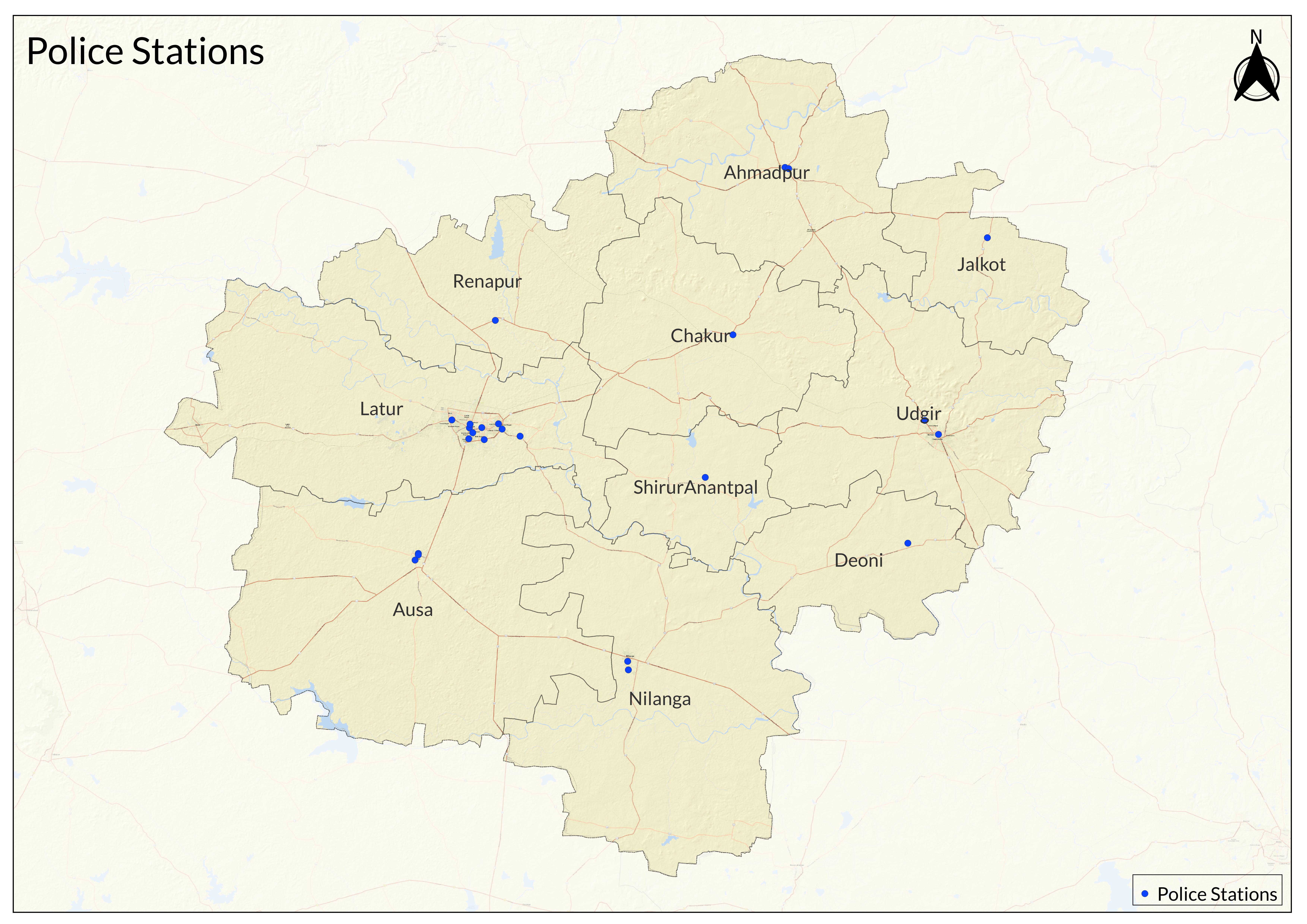
The police play a significant role in crowd management, security, and crime prevention, especially during large gatherings at Ganj Golai, Siddheshwar Temple, and Udgir Fort, as well as during the Siddheshwar Rath Yatra and other major festivals. Enhanced law enforcement measures are implemented in these areas to maintain order and ensure public safety.
Police stations in industrial zones like Latur MIDC and major agricultural centers such as Ahmedpur and Deoni are crucial for protecting businesses, preventing theft, and maintaining law and order in both urban and rural settings.
In villages and smaller towns, locals commonly address police personnel as 'saheb', while some use 'sir'. If the officer is a known acquaintance or relative, they may be referred to as Mama, Dada, or Kaka, reflecting the community’s familiar and respectful approach toward law enforcement.
Latur’s Police and Judiciary: Select Variables
Graphs
Please Note
- Data from District Statistical Abstracts comes in financial years, but is graphed below in calendar years (2015 in our graph means FY 2015-16).
- The District Statistical Abstracts are in Marathi. Translations were done carefully, but some titles or details may differ. There may be some data entry errors. Please report any issues you find.
- Sometimes districts without data may show empty graphs. We've removed them but let us know if any remain.
- Some graphs may not render correctly. A hard refresh (Ctrl/Command +Shift +R) usually fixes this.
Criminal Cases
Police Infrastructure and Workforce
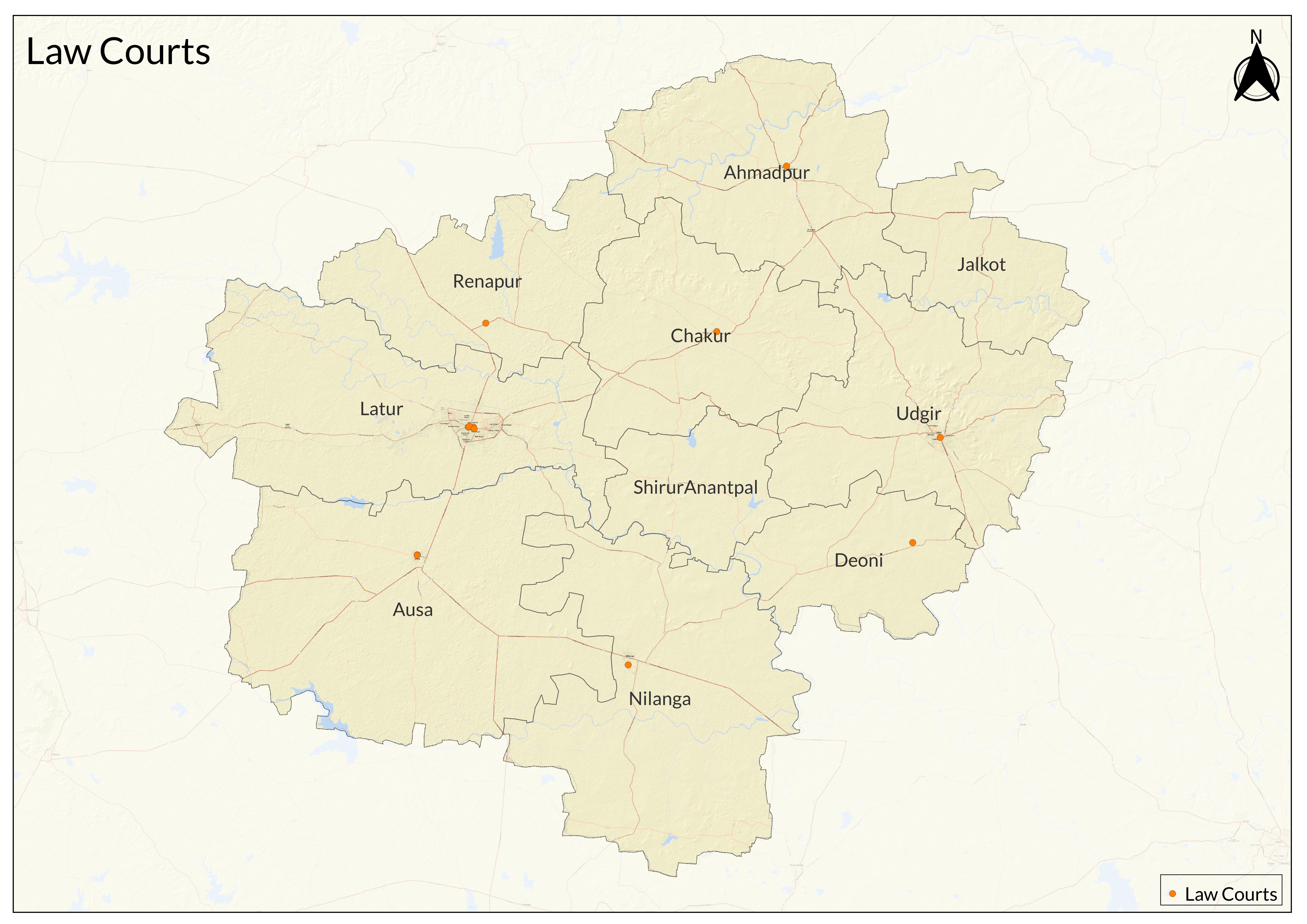
Judicial System
Last updated on 13 November 2025. Help us improve the information on this page by clicking on suggest edits or writing to us.